
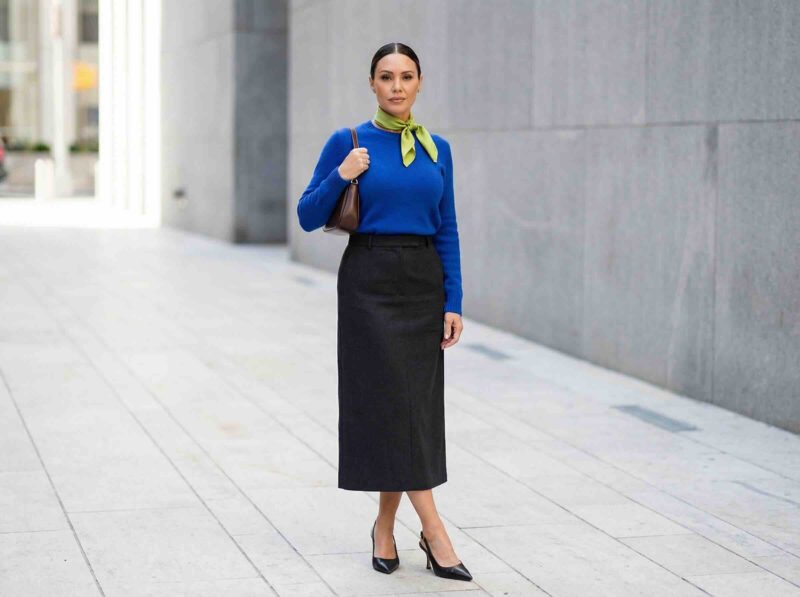
The biggest spring 2026 color trend is not one shade. It is the willingness to wear several at once. After years of beige, biscuit, camel, and all the careful manners of the neutral wardrobe, this season’s color palette feels cheerfully disobedient: cobalt with lime green, violet with poppy red, butter yellow with camel, orange with charcoal gray. These color combinations sound a little suspect on the hanger and surprisingly chic once they are on the body. That tension is exactly what makes them good.
I see this as a reaction to the caution of 2025, when a pop of red or a single standout bag often did all the work. Now the mood is bolder. Fashion week delivered canary, chartreuse, teal, tomato, and Klein blue with a straight face, and the runway message from Prada, Versace, Alaïa, Valentino, Celine, and Jil Sander was clear: color is back, and it is happiest when it is slightly argumentative.
Even Pantone’s color of the year, Cloud Dancer, matters here. A chalky, airy white sounds quiet, but it explains why these louder pairings feel controlled rather than chaotic. You need a little breath in the mix. A little pause.
Why the Spring 2026 Color Palette Works Now
The smartest version of this trend is not random color-blocking for its own sake. It is contrast with structure. On the runway, the loudest hues were often grounded by black, Cloud Dancer white, dark gray, chocolate brown, camel, or khaki. That is why a strange pairing reads as intentional instead of accidental. The eye gets something vivid, then something steady.
This is also why the old color wheel rules feel less useful than they once did. Matching shades too neatly can look a bit polite. The new mood likes friction: one clean primary, one odd sour note, one sober base. Very little fuss. Plenty of nerve.
Five Bold Color Pairings That Look Better Than They Should
Cobalt Blue + Lime Green
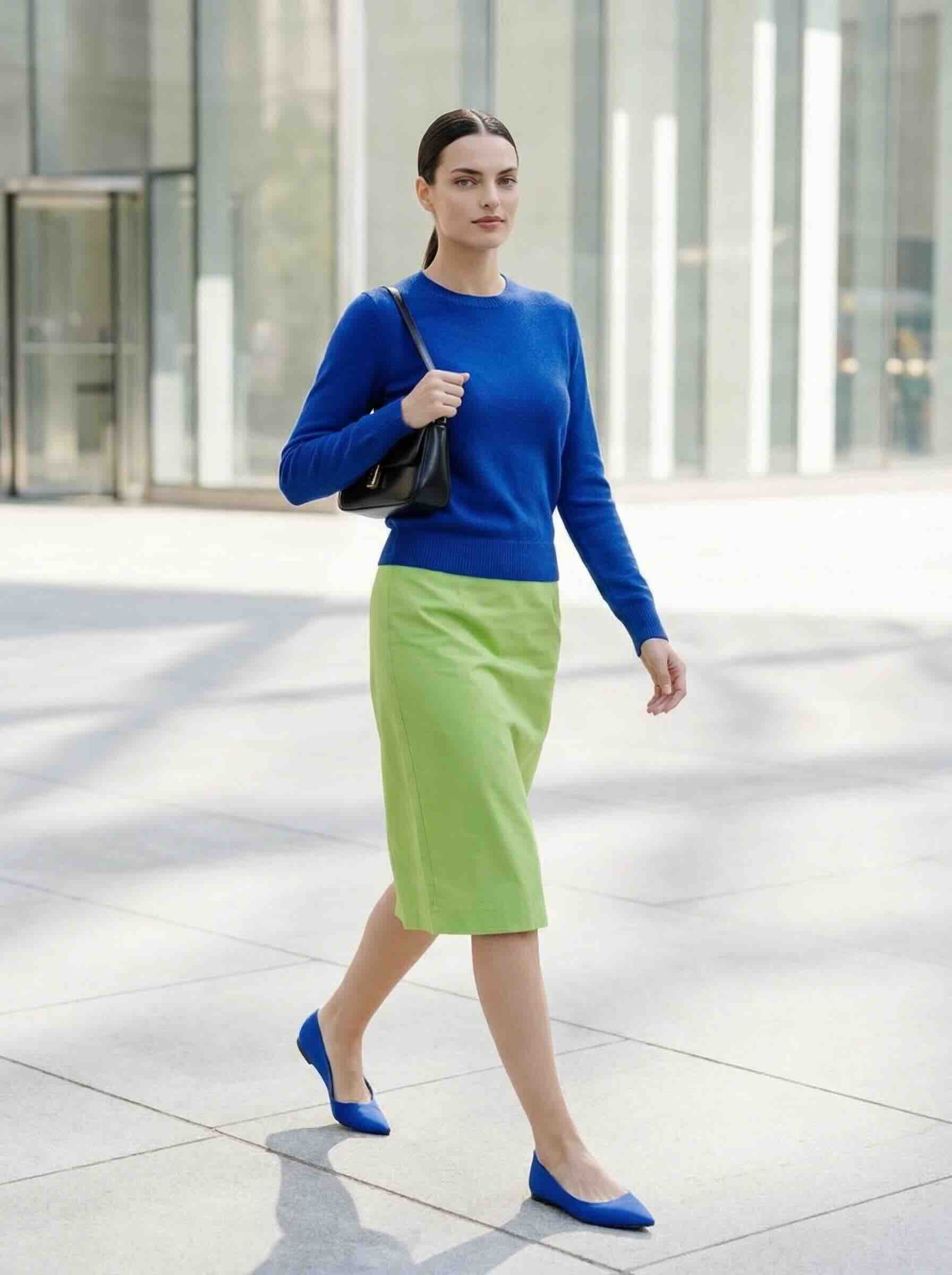
This may be the defining color combo of the season. Celine showed light lime with bright blue, while Prada pushed turquoise, canary, and lime into the same conversation. What makes cobalt and lime work is their clarity. Neither is muddy. Both look freshly mixed, almost glossy, so the pairing feels crisp rather than messy.
For real life, keep the silhouette simple: a cobalt crewneck with a grass green skirt, or lime knitwear over light blue denim. If you are color-shy, make one piece small. A lime flat or scarf under a cobalt coat is enough. Sporty fabrics help here too—cotton poplin, technical nylon, washed denim, dry knits—because the finish keeps the palette from tipping into costume.
Violet + Poppy Red
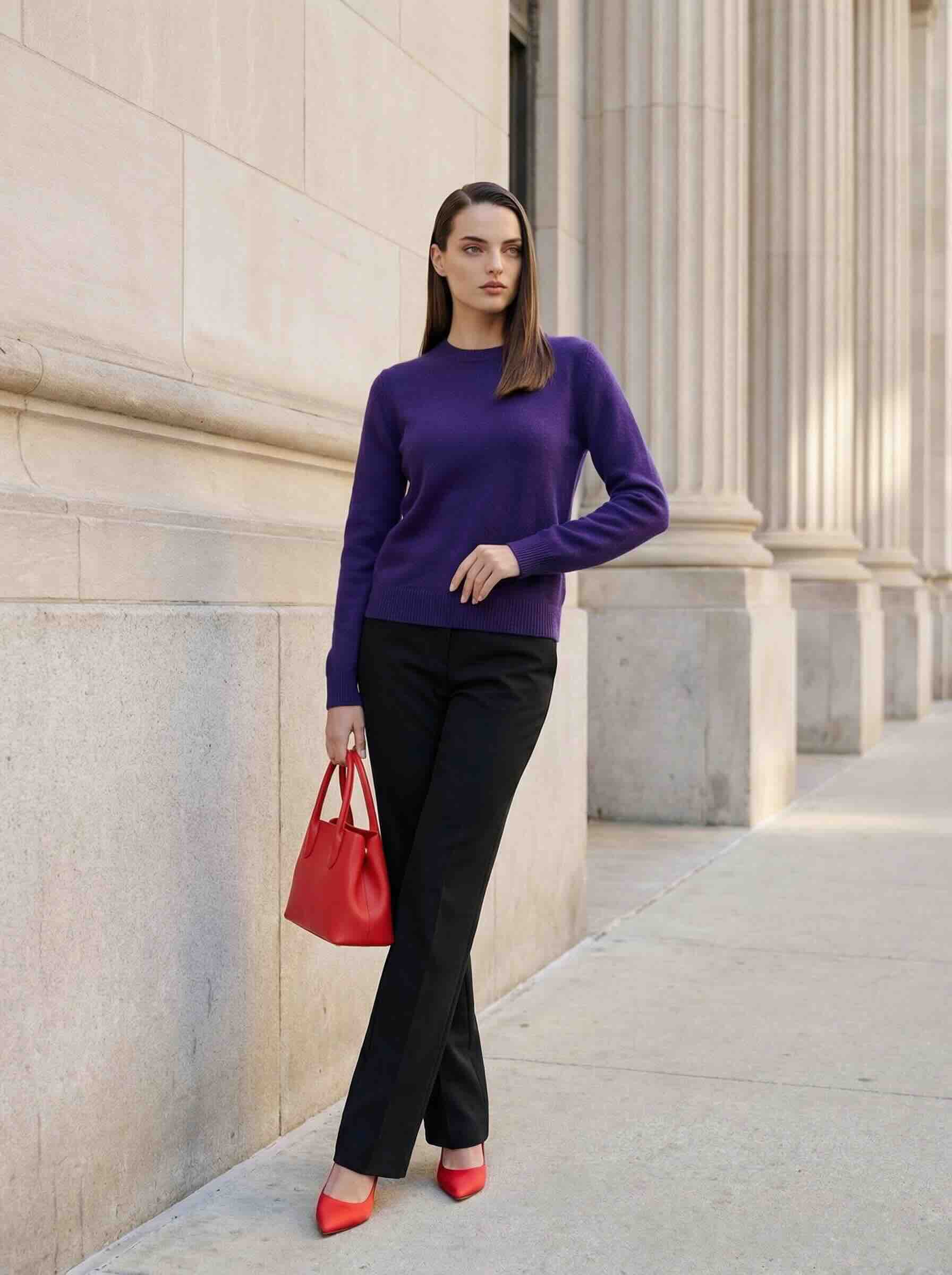
Purple with bright red should be dreadful. Somehow, it is not. Versace made the case with a full, high-voltage mix of purple, red, and blue that felt unapologetically glamorous, while Jil Sander and others proved that violet can act almost like a neutral when it is deep enough. Eggplant, aubergine, and sharper violet all have more range than people think.
The trick is restraint in texture. If the red is satin, let the violet be matte. If the purple is fuzzy mohair, let the red arrive in a smooth leather shoe or a neat cotton shirt. Black accessories help. So does a strip of Cloud Dancer at the collar or cuff. For anyone easing into this pairing, start with a violet sweater and a poppy bag, then add a red lip if you want the whole color story to connect.
Orange + Charcoal Gray
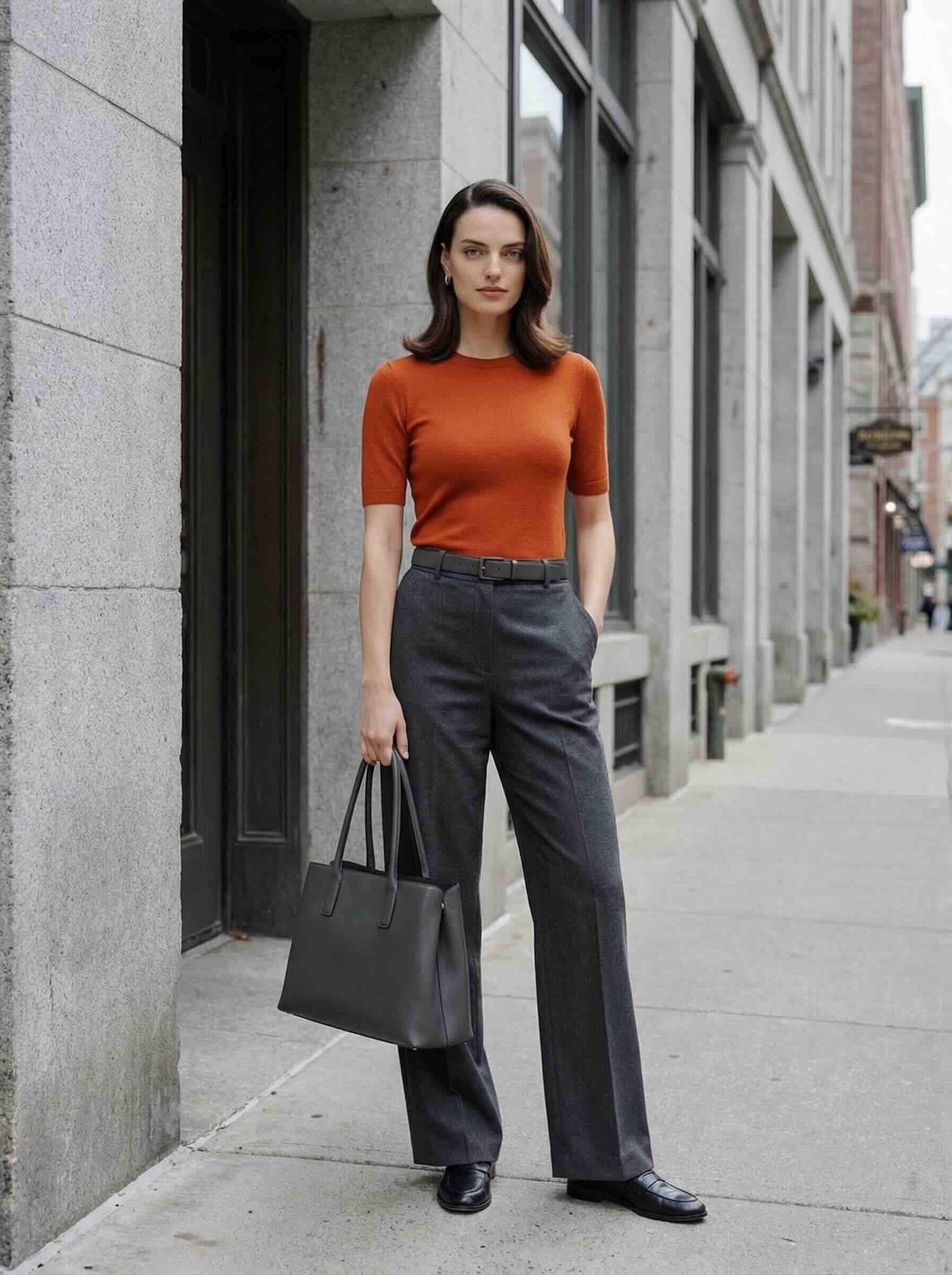
This is one of my favorite pairings because it does not try too hard. Alaïa showed ember orange against serious gray, and that sober base is what makes the whole thing sing. Gray takes the sugar out of orange. Orange puts some pulse back into gray. Together, they look grown-up, not gimmicky.
This is especially useful for work. Think a charcoal trouser with an orange knit, or a dove-gray skirt with a rust-orange tank and a dark belt. If bright orange feels too eye-catching near your face, wear it lower down: a skirt, a flat, a bag. The same rule works for body balance in general. Put the brighter color where you want attention, and let the quieter one smooth the line elsewhere.
Butter Yellow + Camel
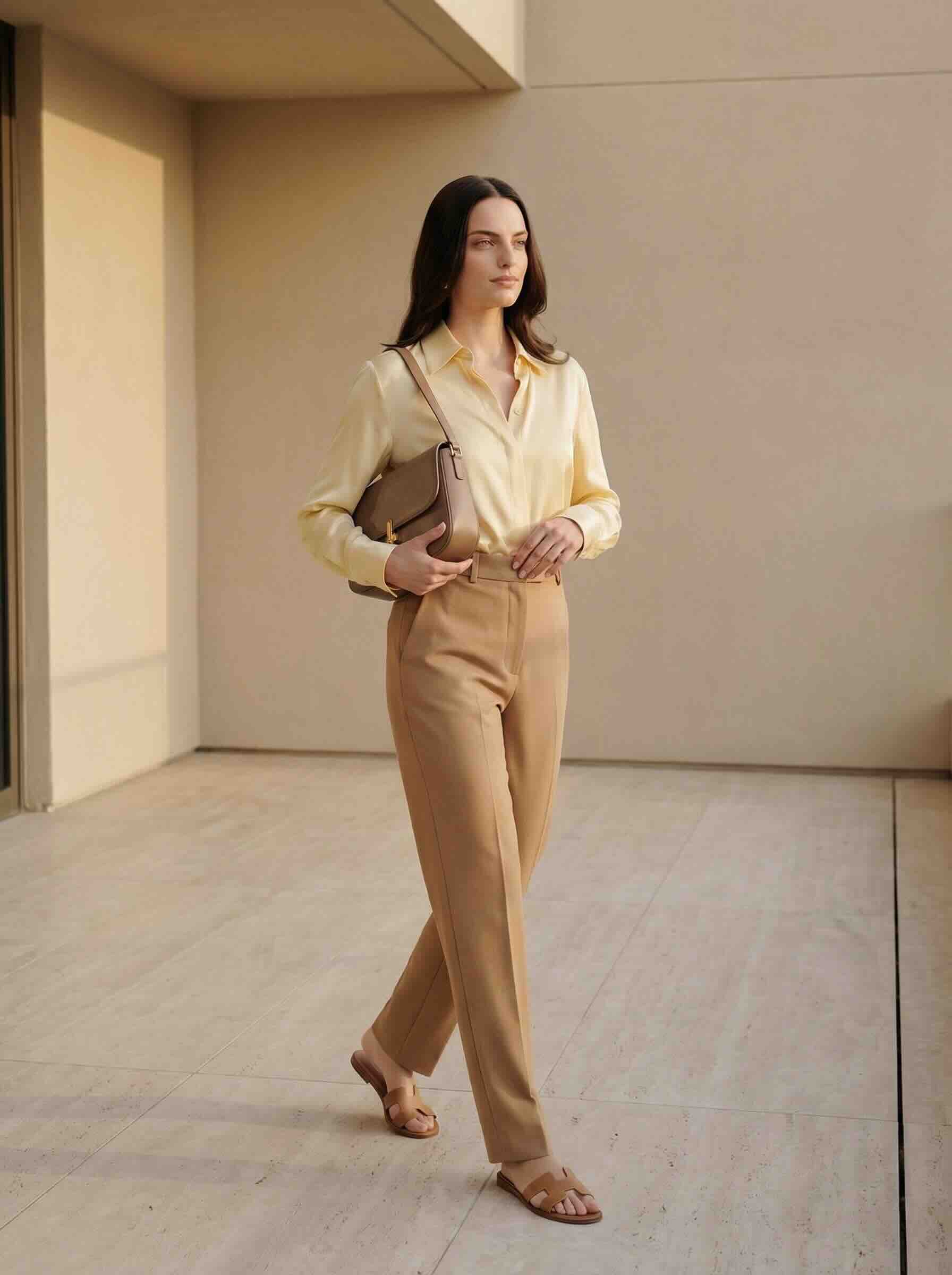
Not every unexpected pairing has to shout. Butter yellow with camel is the softer side of the spring color mood, but it still has that lovely not-quite-right tension that makes an outfit memorable. Yellow replacing khaki is one of the season’s smartest moves: it feels fresher, lighter, and a touch more cheery without becoming sugary.
Choose yellows with a little cream in them rather than acid canary if you want maximum wear. A butter yellow shirt with camel trousers, or a yellow trouser with a mocha knit, reads polished and expensive even when the pieces are not. This is an especially good formula for anyone who likes color but prefers a lower-contrast palette. It also photographs beautifully, which is not always true of pastel dressing.
Soft Pink + Dark Gray
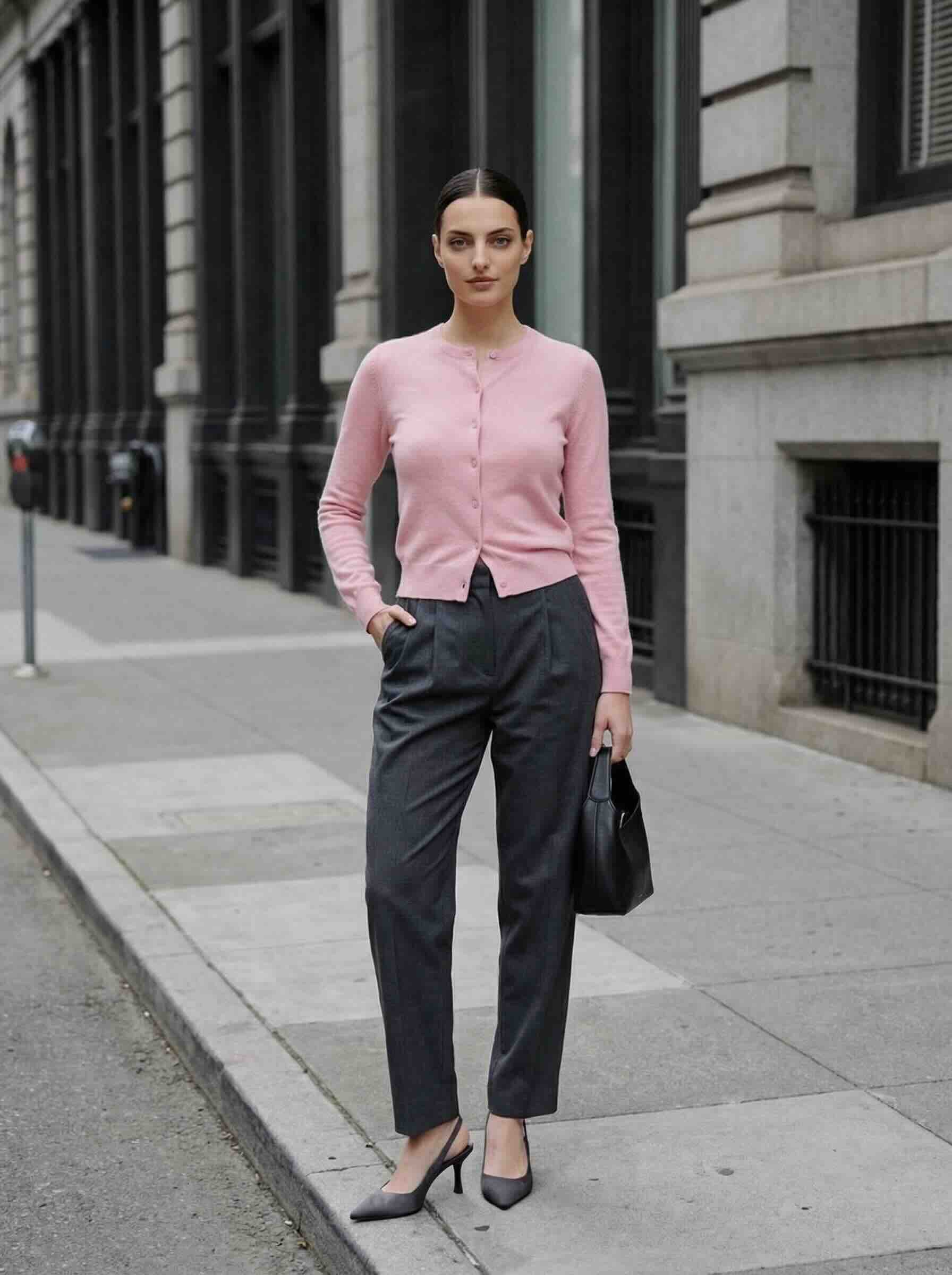
Valentino’s soft pink against dark gray was one of the season’s chicest lessons in contrast. The gray removes any hint of sweetness. The pink stops gray from feeling corporate. Together, they create a style that is elegant, modern, and far more useful than either shade would be alone.
I would wear this with clean lines: a dark gray coat over a soft pink tee, or a pink cardigan with gray pleated trousers. If you want to push it further, add a tiny note of petrol, teal, or light blue at the shoe or bag. Just tiny. The point is not to keep adding color until the whole thing starts shouting.
How to Wear Bold Color Without Looking Chaotic
The easiest mistake is trying to make every part of the outfit interesting. Better to let the color do the talking and keep the cut disciplined. A straight trouser, a column skirt, a boxy shirt, a trim cardigan, a clean trench: these shapes make even a difficult pairing feel calm. The minute the print, jewelry, and silhouette all start competing, the outfit loses its nerve.
Proportion matters just as much as hue. I like a rough 60-30-10 balance: one dominant color, one supporting color, one small accent. That formula makes a bold pairing feel wearable. It also helps on different body types. If you want to lengthen the frame, keep the deeper color in a long line and add the brighter shade in a cropped layer or accessory. If you want emphasis at the shoulders, use the lighter or clearer shade on top. If you prefer the opposite, reverse it.
Fabric makes a real difference too. The best color combinations often rely on contrast in surface as much as contrast in tone. Crisp poplin with brushed wool. Satin with twill. Dry linen with polished leather. When every piece is shiny, the outfit can look busy. When one fabric is matte, the whole thing settles.
And do not underestimate repetition. If your shoes echo your bag, or your knit picks up a tiny stripe in the skirt, the outfit suddenly looks thought through. This is how an unexpected pairing becomes a personal style choice rather than a dare.
Try This: Easy Outfit Formulas for the Spring Season
- Cobalt sweater + chocolate brown trouser + white sneaker.
- Butter yellow pant + camel jacket + Cloud Dancer tank.
- Soft pink tee + charcoal skirt + black sandal.
- Lime cardigan + light blue denim + silver flat.
- Poppy red top + khaki trouser + navy trench.
What to Look For When Shopping the Trend
If you are buying into this spring color moment, spend money on shape before novelty. A beautifully cut trouser in cobalt will outlast a fussy blouse in the same hue. The same goes for skirts, short coats, and knits. Look for pieces with enough visual discipline to handle a difficult color.
At the high-street end, I would start with one clean item: a yellow trouser, a purple cardigan, a red flat, or a teal shirt. Mid-range is a good place for sharper tailoring and better knitwear; Tory Burch, Tibi, and similar labels often get the balance of polish and play right. At investment level, Prada, Bottega Veneta, Chanel, Miu Miu, and Louis Vuitton are useful references for how color can feel luxurious without becoming precious. Often it is the cut, not the price, that keeps the palette elegant.
My advice is to avoid buying an entire new color story at once. One strong piece plus what you already own is enough. Most closets already contain the buffers: gray trousers, black sandals, dark denim, camel tailoring, a white tank. Those pieces are the reason a bolder wardrobe still feels like your wardrobe.
Care & Longevity
Bright color needs a little respect. Wash saturated pieces inside out in cold water, use a color-catcher sheet for the first few wears, and dry them away from hard sunlight so the hue does not flatten too quickly. Knits should be folded, not hung. Tailored pieces can often be steamed rather than over-cleaned.
I still have an old violet cardigan that has faded, very gently, from sharp royal to softer plum over the years, and I love it more now than when I bought it. It aged with me. Good color can do that. It does not have to stay loud forever to stay beautiful.
The Takeaway
The best spring color dressing is not about being fearless for the sake of it. It is about learning which clash feels like you. Maybe that is cobalt with chartreuse. Maybe it is orange with gray, or soft pink with dark graphite, or yellow with camel and a red shoe. The chic version of this trend is not chaotic at all. It is edited, precise, and a little mischievous. Which, in my experience, is often when style looks most alive.


